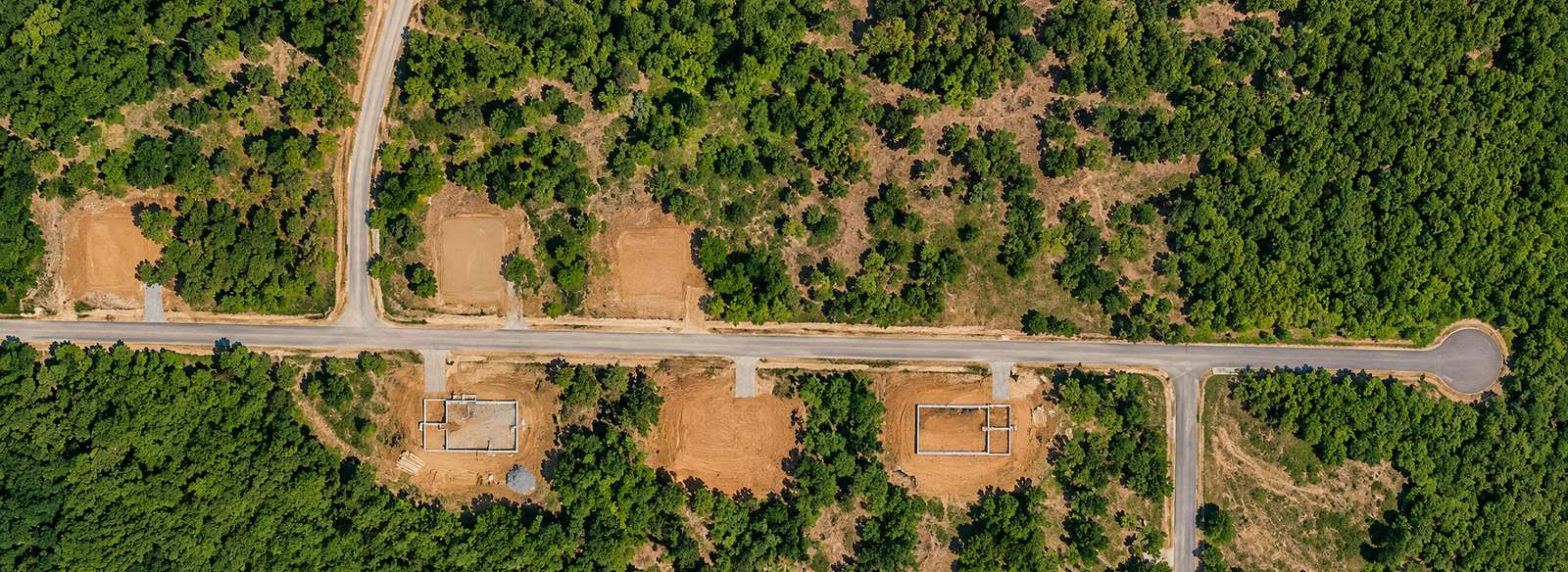
Developers · Landowners
Subdivision and land development, from first idea to recorded plat
Dividing land can bring value, and the right plat gets you there. We design it to the ordinance, see it through review and record it.
What’s included
The tract, surveyed
We survey the parent tract as part of the subdivision, usually all of it and sometimes only a portion, before any new lines go in.
Concept sketches and site plans, when needed
When a project calls for it, we consult on what your land allows and draw concept sketches or site plans to the ordinance: lot size, frontage, setbacks and access.
Review handled
We prepare applications, submit, answer comments and resubmit. You either pay any fees directly, or we pay them on your behalf.
Recorded
Final plat recorded at the Register of Deeds. We collect every signature and certification recording needs, and send you the recording information.
When you need one
- Laying out lots for a new development
- Dividing a family tract or carving out a homesite
- Dividing unused land from your parcel to build a home or sell it
- Dividing land as a will directs, or to settle an estate
- Dividing land owned jointly so each owner gets their own parcel
- Separating a house from the surrounding acreage, often for a loan or a sale
- Separating two homes on the same parcel
- Combining parcels or moving a line between neighbors
Ways to divide or adjust land
Every county and town sets its own rules. We’ll tell you which ones apply to your land.
- Exempt plat
- Often has a shorter path to approval.
- Minor subdivision
- A few lots and no new street. Each county sets its own limit.
- Recombination
- Parcels combined, or a line moved between neighbors by agreement.
- Family subdivision
- Land divided among family members. Not every county or town offers it; where it’s allowed, the path is often simpler.
- Major subdivision
- More lots, or a new street to build. Usually a longer review.
Common questions
What is a subdivision?
Dividing one parcel into two or more lots to sell or build on. Two lots or twenty, North Carolina law calls it a subdivision. It doesn’t mean new roads or new utilities. A few kinds of division are exempt from the full review, and those often have a shorter path to approval. We’ll tell you which applies to your land.
Is a survey required to subdivide land?
Generally, yes. Outside a few narrow exceptions, a survey is required to convey or hold separately part of a larger tract. In most cases that means a boundary survey of the entire parcel being divided, but in some situations we only need to survey a portion. We’ll advise case by case.
Is subdividing the first step when wanting to build a home on vacant land?
It can be. We’ll always advise on your next best step when you’re considering new development, and if subdividing isn’t it, we’ll refer you to other services.
Can I divide my land any way I want?
Most subdivisions need county or town review and approval. Each new lot has to meet the local ordinance for size, road frontage, access and setbacks. We check what your land allows before we draw anything.
How long does review take?
It depends on the jurisdiction. Some review a plat in hours, others take weeks, and the number of review cycles isn’t in our control either. We’ll give you a realistic range when we quote.
Can I subdivide my property if I have a mortgage?
Generally, yes, but talk with your lender first. To convey part of a mortgaged property to a new owner, you’ll likely need a release from the lender for that part.
What happens after the plat records?
You have all the information you need to work with an attorney to convey title, or with a real estate agent to sell the lots.
How much does a subdivision cost?
Every project is different, so every quote is too. Cost is driven by the number of lots, the parent tract and the review fees. Send the address or parcel number, and if we’re a fit, we’ll quote it within one business day.
How can we help?
Reach out. If we’re a fit, we’ll offer a no-obligation quote and schedule.